
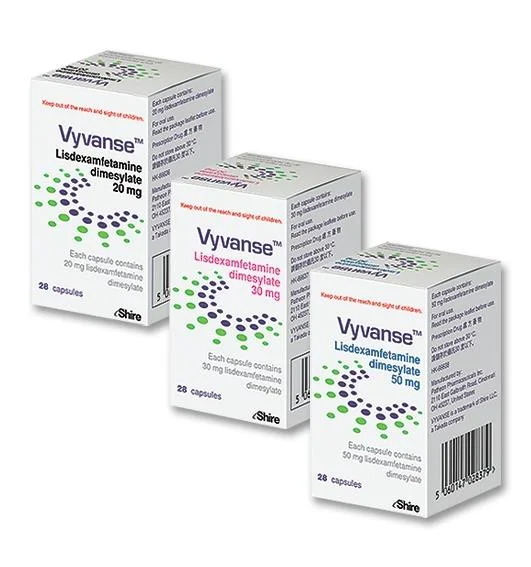
Buy Vyvanse 30mg
Price range: $250.00 through $700.00
Vyvanse 30 mg contains lisdexamfetamine, a prescription stimulant used for ADHD and, in adults, moderate-to-severe binge-eating disorder in the United States. Use only under the direction of a licensed healthcare professional. Approval and product information vary by country.
Vyvanse 30 mg: Uses, Dosage Information, Safety and What to Know
Vyvanse 30 mg is a prescription medicine containing lisdexamfetamine, a central nervous system stimulant. It is prescribed for attention-deficit/hyperactivity disorder (ADHD) and, in adults, moderate-to-severe binge-eating disorder. If you are researching this strength, this guide explains what it is used for, how clinicians approach dosing, what to discuss with a healthcare professional, and which safety information matters.
Vyvanse is a controlled prescription medicine with a risk of misuse and dependence. It should only be used by the person it was prescribed for and exactly as directed by their prescriber. This information is educational and does not replace the medication guide, local prescribing information, or advice from a doctor or pharmacist.
What is Vyvanse 30 mg?
Featured snippet: Vyvanse 30 mg is a prescription-strength dose of lisdexamfetamine, a central nervous system stimulant. In the United States, it is approved to treat ADHD in adults and children aged 6 years and older, and moderate-to-severe binge-eating disorder in adults. Whether it is appropriate depends on an individual assessment by a licensed prescriber.
Vyvanse is a brand name for lisdexamfetamine dimesylate. The 30 mg strength is available as a capsule and, in some markets, a chewable tablet. Availability, approved uses, and prescribing rules can differ by country, so check the product information for your location.
Lisdexamfetamine is a prodrug: the body converts it into dextroamphetamine, an active stimulant. This does not make it risk-free or suitable for everyone. The U.S. prescribing information carries a boxed warning about abuse, misuse, and addiction, and calls for assessment and monitoring by the prescriber.
What is Vyvanse 30 mg prescribed for?
ADHD
In the United States, Vyvanse is approved as part of a broader treatment plan for ADHD in adults and children aged 6 years and older. ADHD can affect attention, impulse control, and activity levels. A clinician considers symptoms, how they affect daily life, medical history, and other possible explanations before deciding on treatment.
Medication is only one part of care. Depending on the person’s age and needs, a treatment plan may also include behavioral support, counseling, educational accommodations, or other services. A prescriber should monitor response and side effects over time.
Binge-eating disorder in adults
In the United States, lisdexamfetamine is also approved for moderate-to-severe binge-eating disorder in adults. This use is not the same as treating obesity or promoting weight loss. It should not be used as a weight-loss medicine. Diagnosis and treatment should be overseen by an appropriate healthcare professional, and care may include psychological or nutritional support.
Approval differs by location
The approved age groups and uses for lisdexamfetamine vary by country. Do not assume that a use approved in one place is approved everywhere. Ask a local doctor or pharmacist which product information and prescribing rules apply to you.
Why might a prescriber choose the 30 mg strength?
The right dose is individual. In the U.S. label, 30 mg is listed as the initial morning dose for ADHD and adult binge-eating disorder; the prescriber may then adjust treatment according to response and tolerability. That does not mean everyone should start at 30 mg, or that a person should change their dose without medical advice. A clinician considers the diagnosis, other medicines, health history, and any side effects.
For ADHD, the U.S. label describes weekly dose adjustments when indicated. For adult binge-eating disorder, it describes a different titration schedule and treatment-dose range. These are label details, not personal dosing instructions. The prescriber should tell each patient exactly how to take their prescription.
How is Vyvanse 30 mg taken?
Follow the label on your prescription and the instructions from your prescriber or pharmacist. In general, U.S. patient information describes taking lisdexamfetamine by mouth once each morning, with or without food. Taking it later in the day may make it harder to sleep.
Some capsule instructions allow opening the capsule and mixing all its contents with a specified food or drink. These instructions can depend on the exact product and country. Do not divide a capsule’s contents to create a smaller dose, save a prepared mixture, or alter the medicine unless the product instructions and a healthcare professional say to do so.
If you miss a dose, check your medication guide or ask a pharmacist what to do. Do not double up to make up for a missed dose. If you think you took too much, seek urgent medical advice or contact your local poison center or emergency service.
What should be discussed before starting?
Before prescribing Vyvanse, a healthcare professional should review relevant health and medication history. Be ready to mention:
- Heart disease, high blood pressure, an irregular heartbeat, fainting, or a family history of serious heart problems or sudden death.
- Mental health history, including bipolar disorder, depression, psychosis, or suicidal thoughts.
- Seizures, tics, circulation problems affecting fingers or toes, glaucoma, thyroid problems, or kidney disease.
- Pregnancy, plans for pregnancy, or breastfeeding.
- Current and recently stopped prescriptions, over-the-counter medicines, vitamins, and supplements.
- A personal or family history of substance misuse or problems with prescription medicines.
Vyvanse must not be used with a monoamine oxidase inhibitor (MAOI), or within the period specified by the official label after stopping one. The U.S. label specifies 14 days. A prescriber or pharmacist should check for interactions, including before you start, stop, or change another medicine.
Side effects and serious warning signs
Possible side effects include reduced appetite, dry mouth, trouble sleeping, nausea, anxiety, dizziness, and weight loss. Not everyone experiences the same effects. Tell the prescriber if a side effect is severe, persistent, or interfering with daily life; they can assess whether the treatment plan needs review.
Seek urgent medical attention for symptoms such as chest pain, shortness of breath, fainting, seizure, severe agitation, hallucinations, or signs of an allergic reaction such as swelling of the face or throat. New or worsening mood symptoms, circulation changes in the fingers or toes, or unusual behavior should also be reported promptly.
Stimulants can raise heart rate and blood pressure. The prescriber may check these before and during treatment. For children, growth and weight may need monitoring. Ask the prescriber what monitoring is appropriate for the individual taking the medicine.
A practical framework for follow-up appointments
A short record can help make follow-up visits more useful. Consider noting:
- What changed: Describe specific examples related to the treatment goal, such as attention during a routine task or episodes of binge eating.
- When effects occur: Record the time the medicine is taken and when benefits or unwanted effects appear.
- Sleep and appetite: Note changes, including difficulty falling asleep or eating much less than usual.
- Other medicines: Keep an up-to-date list of prescriptions, non-prescription products, and supplements.
- Questions or concerns: Bring up anything that feels unusual, difficult to manage, or unclear.
This record is not a substitute for clinical assessment. It gives the patient and prescriber clearer details to discuss when reviewing whether the treatment remains appropriate.
Vyvanse 30 mg versus other treatment options
There is no single ADHD or binge-eating treatment that is right for everyone. A clinician may discuss different medicines, non-medicine supports, or a combination, depending on the diagnosis, health history, preferences, response, and local guidance.
Do not compare medicines only by milligram strength: different active ingredients and formulations are not directly interchangeable by dose. If a pharmacy supplies a generic lisdexamfetamine product, ask the pharmacist or prescriber about the specific product and whether any local substitution rules apply. Do not switch, combine, or adjust treatments on your own.
Potential benefits and considerations
| Potential treatment benefit | Considerations to discuss |
|---|---|
| May be included in a clinician-led plan for ADHD or adult binge-eating disorder when appropriate | Requires a prescription and ongoing clinical review |
| Available in more than one dosage strength and formulation in some markets | Appetite, sleep, mood, heart rate, blood pressure, and other effects may need monitoring |
| Can be taken in the morning according to U.S. patient information | Has misuse, dependence, and interaction risks; it is not suitable for everyone |
This is a general overview, not a personal recommendation or a guarantee of results.
Storage, missed doses and safe use
Keep Vyvanse in its original container and in a secure place, away from children and anyone for whom it was not prescribed. Follow the storage instructions on the package. Do not share, sell, or give the medicine to another person. In the U.S., lisdexamfetamine is a Schedule II controlled substance; legal classifications and requirements differ elsewhere.
Ask a pharmacist how to dispose of unused medicine safely in your area. If the prescription is no longer needed, do not keep it where another person could take it. Do not stop or change regular treatment without speaking to the prescriber, particularly if you have been taking more than prescribed or are concerned about dependence.
Frequently asked questions
Is Vyvanse 30 mg a starting dose?
The U.S. prescribing information lists 30 mg as an initial dose for ADHD and adult binge-eating disorder, but the suitable starting dose and schedule depend on the patient and local product information. Only the prescriber should decide or change an individual dose.
How long does Vyvanse 30 mg last?
How long someone experiences effects can vary. The U.S. label describes once-daily morning dosing, but that should not be treated as a guarantee of a particular duration. Ask the prescriber how to assess the medicine’s timing and what to do if effects do not match expectations.
Can Vyvanse 30 mg be used for weight loss?
No. Lisdexamfetamine is not indicated as a weight-loss medicine. Its U.S. approval for binge-eating disorder applies to adults with that diagnosed condition; it is not an approval to treat obesity.
Can I take Vyvanse 30 mg with other medicines?
Some combinations can be unsafe or may require monitoring. In particular, the U.S. label contraindicates use with MAO inhibitors and for 14 days after stopping one. Tell a doctor and pharmacist about all medicines and supplements before starting treatment or making a change.
What if I miss a dose?
Follow the instructions in your medication guide or ask a pharmacist. Do not take a double dose to compensate. Because lisdexamfetamine is generally taken in the morning in U.S. patient information, ask your prescriber what to do if you remember late in the day.
Is Vyvanse the same as lisdexamfetamine?
Vyvanse is a brand name; lisdexamfetamine is the active medicine. Generic lisdexamfetamine products may be available in some markets. Product availability and substitution rules vary, so check with a pharmacist or prescriber.
What is the Let Property Campaign, and is it related to Vyvanse?
No. The Let Property Campaign is an HMRC disclosure service for UK landlords with undeclared rental income. It has no connection to Vyvanse, ADHD, or medicine prescribing. It should not be targeted as a related FAQ on a Vyvanse product page because it addresses a separate search topic.
| Quantity | 100 PILLS, 200 PILLS, 300 PILLS |
|---|
2 reviews for Buy Vyvanse 30mg
Add a review
Related products


ADHD
Sophia-Grac –
total touchdown! Arrived the next day in perfect discreet packaging. The focus and calm energy it gives me is exactly what I needed. Brilliant service and genuine product — I’m thrilled!”
Berlin –
I recently ordered Vyvanse online and the whole process was super easy and friendly from start to finish. The team was helpful with my questions, payment went smoothly, and boom touchdown successfully delivered right to my door, discreet and on time!